
How can an investment policy statement help an organization and its advisors turn values and identity into useful investment guidelines?
That’s where mission-aligned investing comes in: putting our invested dollars to work in ways that reflect our values and support our mission, while keeping the foundation financially strong for the future. An Investment Policy Statement (IPS) helps make that happen by giving boards, staff, and advisors a shared guide for deciding how to invest.
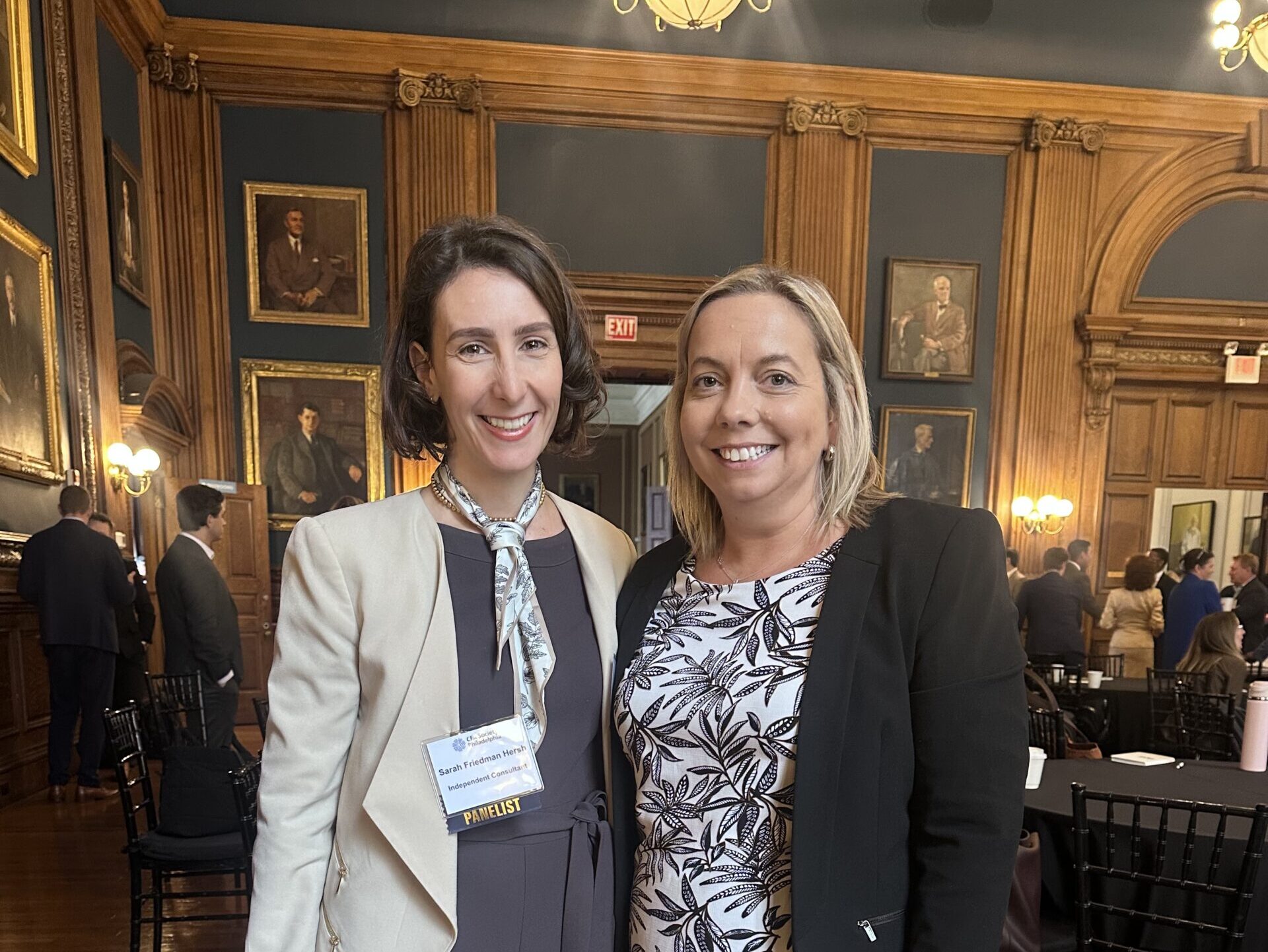
We explored these ideas on October 1 at the CFA Society of Philadelphia’s Endowments and Foundation Conference during a panel on “Crafting a North Star Investment Policy Statement”. Joining us were Alexandra Frazier of the Valentine Foundation and Nimrit Kang, chair of the Samuel S. Fels Fund’s Investment Committee. Jana Holt of SEI moderated the conversation.
For us, the discussion came back to a simple question: How do we make sure the values that guide our grants also guide our investments? A useful IPS helps us carry those values into everyday decisions.
An IPS should help leaders make decisions.
An IPS can easily become a document that is perfunctorily reviewed once a year and then put back on the shelf.
But an effective IPS should reflect and be integrated into the ongoing conversations boards and staff have about the organization’s priorities and activities.
At Scattergood, the IPS is increasingly a tool for asking not only How much risk are we willing to take? and What is our target allocation?, but also What are we trying to accomplish with our endowment, and what values should inform how we get there?
As a Philadelphia-based institution guided by Quaker principles and dedicated to advancing behavioral health equity, aligning our portfolio with our core identity has required an intentional, multi-layered strategy. Our effort began in 2009 by implementing negative screens to exclude industries that conflicted with Quaker values, including defense, weaponry, violence, private prisons, addictive substances, gambling, and others. By 2015, collaborating with Aperio (now BlackRock) enabled us to construct a tailored fund that maintained these negative screens while introducing an intentional regional focus across Pennsylvania, New Jersey, and Delaware. Soon after, in 2016, we extended our approach by issuing our initial program-related investment to a trusted partner organization, establishing an essential framework for ongoing impact lending. Between 2019 and 2021, we partnered closely with our investment advisor to restructure portfolio allocations, successfully placing 41% of assets under the stewardship of racially diverse managers. Our strategy expanded again in 2021 as we initiated shareholder advocacy with As You Sow to push for enhanced ESG practices and corporate diversity. Most recently, Scattergood transitioned its advisory relationship to two local Philadelphia firms, including one led by a racially diverse executive team. Looking ahead to our fiscal year 2025 audit, we will publish our full investment holdings on Form 990-PF to ensure complete transparency.
The journey has not been about finding a single “perfect” mission-aligned portfolio. It has been about creating as much alignment between Scattergood’s values and investment decisions as between our values and other operations – grantmaking, education, advocacy, and more.
Start your mission alignment journey with what you already know.
One of the most useful insights from the conversation was that mission-aligned investing does not necessarily require reinventing the investment process. Organizations need clarity about their objectives, spending obligations, target asset allocation, liquidity needs, risk tolerance, and investment horizon. Once those pieces are clear, organizations can consider a different set of questions that will help narrow the universe of appropriate investment strategies:
- Which aspects of our mission are investable?
- What tools could we use—screens, tilts, manager selection, shareholder advocacy, or PRIs?
- Are we seeking to avoid certain exposures, actively create impact, or both?
- How much capacity do our external advisors, staff, and board realistically have to oversee a mission-aligned investing program?
- How closely should our investment strategy connect to our grantmaking strategy?
There is also value in patience.
It can be tempting to move quickly toward a fund with an “impact” or “ESG” label. But taking the time to build understanding and buy-in among staff, board members, investment committees, and advisors about investments that are tailored to the organization’s specific mission can create a stronger foundation for decisions that will endure leadership and market changes. The discussion also emphasized that an effective IPS should reflect the organization’s mission—not the current priorities or preferences of whoever happens to be serving on the investment committee.
The role of advisors is changing, too.
The conversation also challenged investment advisors and OCIOs to think differently about their role.
For clients interested in mission alignment, advisors can do more than respond when the topic comes up. They can proactively create space for the conversation, educate clients about available approaches, and help organizations understand what is and isn’t possible.
One of the most valuable experiences for Scattergood was when an investment advisor turned the conversation around and asked about the foundation’s grantmaking:
- What are your specific grantmaking priorities?
- What does success look like for your grants portfolio?
- What grantmaking metrics do you use?
- How can we mirror those priorities and metrics in your investments?
That shift in perspective reshaped the relationship between the foundation and our investment advisor. Rather than viewing them simply as portfolio managers, we began engaging them as genuine collaborators in exploring how all assets can more deeply serve our mission.
Financial performance is essential. Foundations have a responsibility to preserve and grow philanthropic capital so they can continue making grants into the future.
However, when the goal is to activate as much capital as possible toward the mission, success can also include creating opportunities for diverse managers, deploying capital into new areas, and strengthening governance processes.
A north star, not a finish line.
The biggest takeaway from our conversation is that mission-aligned investing is a process, not a destination.
Markets change. Investment managers change. Boards and staff change. Organizational missions evolve. And our understanding of what is possible with both philanthropic and market-rate capital continues to grow.
That means an effective IPS needs to provide both clarity and flexibility: firm enough to establish the principles that matter, but flexible enough to allow an organization to evolve how it puts those principles into practice.
For us, the north star is an investment approach that is financially responsible, grounded in Scattergood’s values, understood by our staff and governing bodies, and connected to the work we are trying to accomplish in the world.
The question we continually challenge ourselves to answer is:
Does our investment capital tell the same story as our mission?
An effective IPS can make sure that it does.